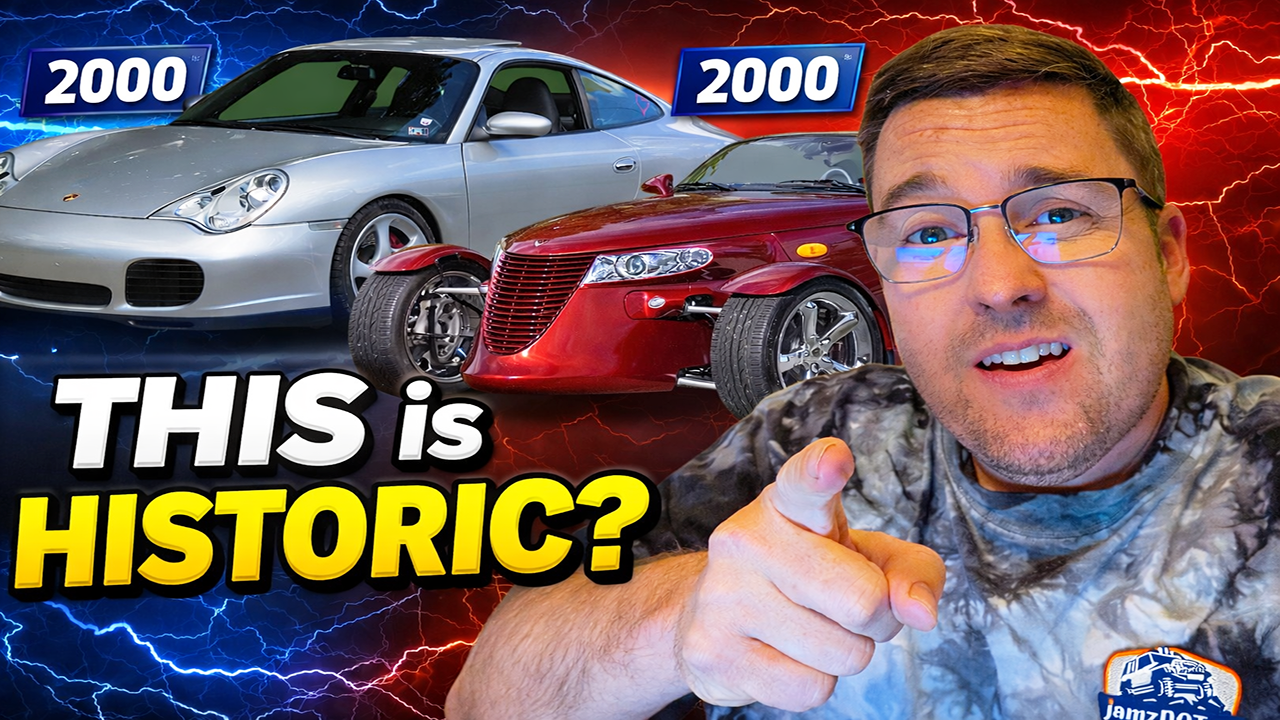
What makes a vehicle “historic”? Is it age, rarity, cultural impact or something else entirely?
Across the United States, a widely accepted standard has emerged: the 25-year rolling rule. Organizations like the Antique Automobile Club of America recognize vehicles as historic once they reach 25 years of age, a benchmark that reflects both preservation value and automotive heritage.
In this video, we explore that question through the lens of the year 2000. Vehicles that many of us still think of as “modern” have now crossed into historic territory. From early performance models to everyday drivers that defined an era, these cars represent a turning point in automotive design, technology, and culture.
This discussion is especially important here in Maryland, where recent legislative changes have created confusion and concern within the enthusiast community. The current interpretation effectively suggests that “automotive history ended in 1999,” ignoring the natural progression of time and the importance of a rolling standard.
The Maryland Collectible Auto Association is actively advocating for a return to a fair and consistent 25-year rolling definition. This approach:
- Aligns Maryland with national standards
- Supports hobbyists, collectors, and restorers
- Preserves automotive history across generations
- Prevents arbitrary cutoffs that limit future historic recognition
We encourage you to watch the video, consider where you stand, and most importantly, join the conversation.
👉 Do you believe a 25-year-old vehicle should be considered historic?
👉 Should Maryland adopt a rolling standard like the rest of the country?
Your voice matters. The future of the hobby depends on it.
